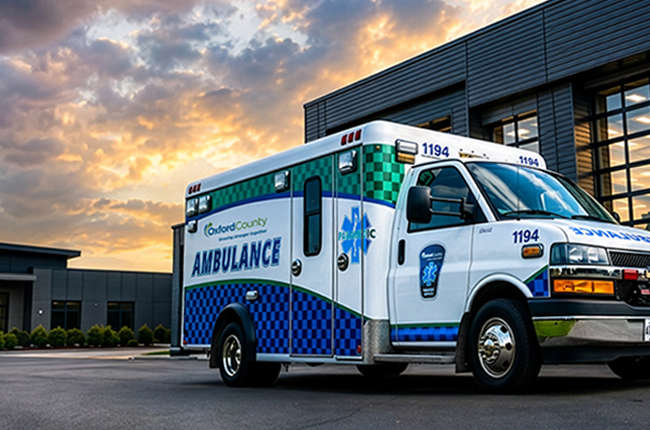
Beginning today, a new dispatch system puts the most serious medical emergencies first
When someone calls 911 for an ambulance, the questions a dispatcher asks can make a difference in deciding how quickly help arrives.
Starting October 14, Oxford County Paramedic Services will use a new system to assess medical emergencies and prioritize ambulance responses. The Medical Priority Dispatch System, or MPDS, is designed to help dispatchers distinguish between calls that may sound similar at first but involve very different levels of medical urgency.
For Ryan Hall, Chief of Oxford County Paramedic Services, the goal is to get an ambulance to the person who needs it most urgently.
The new system gives dispatchers a more detailed framework for assessing the circumstances and determining the appropriate priority for an ambulance response.
MPDS expands the number of possible dispatch classifications from 78 to more than 2,500. That gives dispatchers a more detailed framework for assessing a caller's symptoms and determining the appropriate priority for an ambulance response.
The change also means some people may wait longer.
When resources are limited, calls involving life-threatening emergencies — including cardiac arrest, serious breathing difficulties, stroke symptoms, severe allergic reactions and unconsciousness — receive the highest priority. Someone whose condition is assessed as less urgent may have to wait while an ambulance responds to a more serious call.
That can be difficult for someone who is frightened, uncomfortable or worried about a loved one. But prioritizing calls according to medical urgency is intended to help ensure that the people facing the greatest immediate danger receive help first.
The dispatcher's role doesn't end when the initial questions have been answered.
Callers may receive instructions about what to do while they wait. Dispatchers may also call back using the telephone number from the original 911 call to check on the person's condition. If that condition changes or becomes worse, callers should call 911 again, and explain what's happening. Providing accurate information and following the dispatcher's instructions can help the service respond appropriately as circumstances change.
The new system applies to medical ambulance calls, not requests for police or fire services.
For Oxford County residents, the practical message is straightforward: calling for an ambulance will involve a more detailed assessment, and the wait may depend on the seriousness of the emergency, and the demands on the service at that time.
The aim is to make those decisions more precise — and to get help first to the people who need it most.