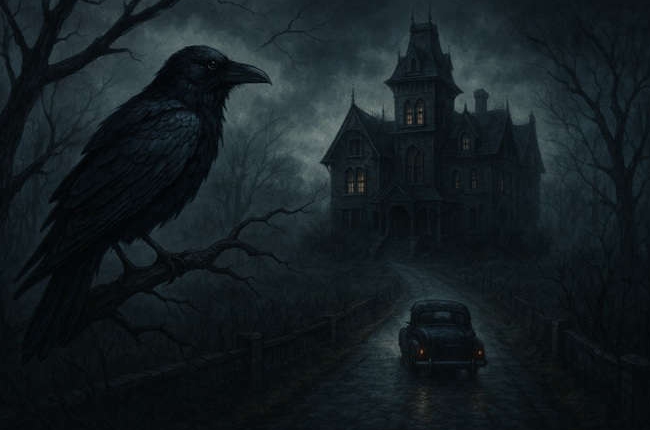
On January 29, 1845, American writer Edgar Allan Poe published a poem that would echo through literary history like a tap at a chamber door. “The Raven” — with its hypnotic rhythm, eerie musicality, and unforgettable refrain of “nevermore” — became an instant sensation, turning Poe into a household name almost overnight.
The poem follows a grieving scholar on a bleak December night, trying to distract himself with “forgotten lore” as he mourns his lost Lenore. A mysterious tapping leads to the arrival of a raven, which perches on a bust of Pallas Athena and answers every question with the same haunting word. What begins as curiosity spirals into obsession, despair, and madness — a descent Poe crafted with meticulous precision.
Inspired partly by a talking raven in Charles Dickens’s Barnaby Rudge, and shaped by the complex meter of Elizabeth Barrett’s poetry, “The Raven” blends mythology, religion, folklore, and psychological unraveling into one of the most famous poems ever written. It was reprinted, parodied, illustrated, debated, and dissected almost immediately — and nearly two centuries later, it still casts a long, dramatic shadow.
Before you ponder your own “midnight dreary,” here’s your Tillsonburg fuel update — clear, calm, and decidedly un-haunted:
-
Pioneer: $118.9
-
Esso: $118.9
-
Shell: $119.9
-
Petro Canada: $119.9
So whether your morning feels poetic, mysterious, or just a little foggy, keep your tank full and your spirits lifted — no ravens required.
