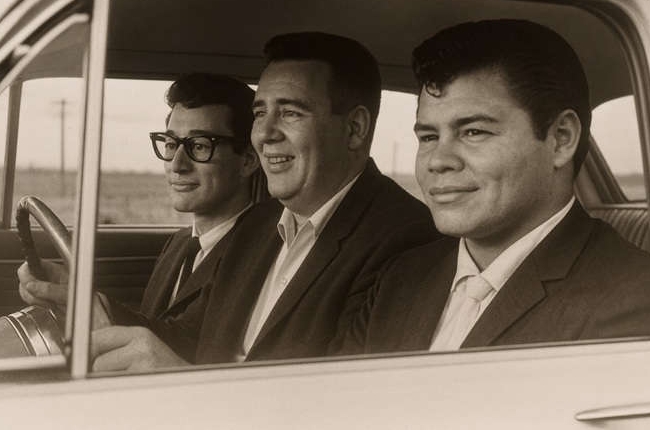
Today marks one of the most somber anniversaries in rock and roll history. On February 3, 1959, a small plane crashed near Clear Lake, Iowa, killing three rising stars — Buddy Holly, Ritchie Valens, and J.P. “The Big Bopper” Richardson — along with pilot Roger Peterson. What began as an attempt to escape the brutal winter conditions of a tour bus became a tragedy that reshaped the future of American music.
Buddy Holly had chartered the plane after long, freezing bus rides left the performers sick and exhausted. Richardson, battling the flu, asked Waylon Jennings for his seat. Valens won his spot on board by a coin toss with guitarist Tommy Allsup. Minutes after takeoff, poor weather and low visibility caused the plane to crash, ending three extraordinary careers far too soon.
The moment was immortalized years later when Don McLean referred to it as “The Day the Music Died” in his song American Pie. The phrase has since become shorthand for the end of an era — the loss of youthful optimism, the shattering of the 1950s rock and roll innocence, and the beginning of a cultural shift that would define the decades ahead.
Holly’s influence alone was seismic. His songwriting, his sound, and even his band setup — two guitars, bass, and drums — became the blueprint for generations of musicians, from Bob Dylan to The Beatles. Valens and Richardson were pioneers in their own right, bringing new voices, new rhythms, and new energy to the stage.
Sixty‑plus years later, the legacy of that night still echoes.
Before you head out into your own winter morning, here’s your Tillsonburg fuel update:
-
Pioneer: $124.9
-
Esso: $124.9
-
Shell: $124.9
-
Petro Canada: $125.9
A full tank keeps the music playing — even on a day when we remember the silence that followed.
